
The Journey and Voice of Joy Burrill

The Journey and Voice of Joy Burrill

Joy Burrill kayaking

Joy Burrill is a Recovery Coach at White Horse in North Conway, New Hampshire. Her journey—marked by resilience, honesty, and compassion—offers an authentic and hopeful look at addiction and recovery. From her childhood in Berlin, NH to her career supporting others, Joy’s experiences illuminate both the challenges of substance use and the promise of a brighter future.

Growing up in Berlin, New Hampshire, Joy was always striving to make a positive impact. She remembers, “I always wanted to help people. That’s what drove me as a teacher and a counselor.”

Her achievements—from earning the Girl Scout Gold Award to working with youth— reflected her deep commitment to her community, as her early life was filled with purpose and ambition. Like many, though, she also carried the weight of family struggles with alcohol/addiction.

“I always knew I was at risk for alcohol/addiction, but I thought I could outrun it.”

As she moved into adulthood, the pressures of life and the pain of personal loss began to add up. She describes her college years as a time when “drinking and partying seemed normal, just part of fitting in.”

Even then, though, she was aware of a line she did not want to cross. “I was always careful, always trying to keep control,” she says. Later, as life brought both joy and heartbreak—including the birth of her children and the loss of her second child—Joy found herself turning to alcohol not just for celebration, but for comfort.

“I thought I was managing it, that I was just coping with life,” she recalls. “But slowly, it started managing me.”

Despite the challenges, her spirit never faded. She continued to teach, to parent, and to give back to her community, even on her hardest days.

“I could be at a soccer game, cheering for my kids, and no one would know what I was carrying,” she shares. “Addiction hides in plain sight.”

Joy’s turning point did not come with a dramatic fall. Instead, it was a quiet, powerful moment with her daughter in the car, listening to Pink’s song “Sober.”

“My daughter said she wanted to sing that song at her talent show. That was my wake-up call. I realized she was watching me, and I wanted to be someone she could be proud of.”

That moment led her to reach out for help—an act of strength, not weakness. “Asking for help was the hardest thing I’ve ever done, but also the bravest,” she says.

Her journey through treatment was not easy, but transformative. “I met people who understood, who didn’t judge,” she explains. “I learned that recovery is about honesty and connection.”

Even as her life changed in unexpected ways, including a new chapter of being separated from her husband and moving away from the community where she grew up, Joy found new meaning. “It hurt, but it also freed me to discover who I really am,” she notes.

Today, she is a recovery coach at White Horse Recovery, using her experience to help others. “I get to walk alongside people as they find their way,” she says. “I always tell them, ‘You’re not alone. Your story matters.’”

Joy is open about her past, not as a source of shame, but as a message of hope.

“Recovery is possible. I’m living proof of that. My kids have their mom back, and I have a life I love.”

For her, each day is an opportunity to grow, to serve, and to be present with her children. “We talk about everything, even the hard stuff,” she says. “I want them to know there’s nothing they can’t come to me with.”

Her life is now filled with gratitude, humor, and a sense of purpose that shines through in every conversation.

“If sharing my story helps just one person, it’s worth it,” she says with a smile. “There’s always hope, no matter where you start.”

If you or someone you know is struggling, you are not alone. White Horse Recovery offers services for those ready to start their journey to recovery. For more information, call 603-651-1441, Ext. 1.
Innovative Program Transforms Lives as Funding Gaps Challenge Rural Recovery Services

Innovative Program Transforms Lives as Funding Gaps Challenge Rural Recovery Services

Executive Director Matthew Plache at recent staff meeting

White Horse Recovery’s Intensive Outpatient Program (IOP) is gaining recognition as a transformative approach to addiction recovery, combining 12 weeks of intensive group and individual counseling that has proven successful in helping clients reclaim their lives. However, the program’s innovative model faces sustainability challenges as insurance reimbursements fall significantly short of actual program costs.

The comprehensive IOP requires participants to attend three hours of therapy, three times per week, plus individual sessions—totaling 10 hours of clinical support weekly. This intensive approach, which costs approximately $12,000-$14,000 per client over the 12-week period, has demonstrated remarkable outcomes, including dramatically reduced recidivism rates and successful reintegration into families and communities.

“We don’t just save lives—we change them,” said Matthew Plache, Executive Director of White Horse Recovery. “When people complete our IOP program, they’re different people. They have their lives back, they’re no longer dependent on substances, and they have the tools and community support to sustain their recovery long-term.”

The program’s success extends beyond individual transformation. Recent data from the Carroll County jail shows that participants in White Horse’s recovery groups experienced a recidivism rate drop to just 30%. One recent graduate, who was facing a three-year prison sentence, completed the program and avoided incarceration entirely, now working toward employment and family reunification.

However, the program’s innovative intensity comes at a cost that is not fully covered by insurance. White Horse absorbs approximately $120 more per session than insurance reimbursements provide, creating an annual funding gap that has historically been supported through individual donors and county grants.

Recent reductions in county funding—from $150,000 to $100,000 over the past few years—have intensified the need for community support. “More than 95% of our IOP clients are Carroll County residents, and many are economically disadvantaged,” Plache noted. “We serve anyone regardless of their ability to pay because we believe everyone deserves access to recovery services.”

The program serves clients throughout Carroll County, with participants traveling from Bartlett, Conway, Jackson, Tamworth, Wakefield, and other communities to the Ossipee location. While alcohol remains the most common substance addressed, the program increasingly serves individuals struggling with opioid addiction, particularly fentanyl.

White Horse’s current Annual Fund drive aims to bridge these critical funding gaps, ensuring the IOP program can continue serving 6-8 clients at any given time while maintaining its high-intensity, personalized approach. The organization also provides additional services at no cost to taxpayers, including Smart Recovery groups at the county jail—a $70,000 annual value.

“Every person in addiction affects at least 10 others—employers, family members, friends,” Plache explained. “In a state where addiction and mental health challenges affect nearly 20% of the population, programs like ours provide hope and real solutions.”

Founded in Center Ossipee, New Hampshire, White Horse Recovery has grown from a small organization into a leading nonprofit with 28 employees across four locations, providing both mental health and substance use disorder services.

If you or someone you know is struggling, you are not alone. White Horse Recovery offers services for those ready to start their journey to recovery. For more information, call 603-651-1441, Ext. 1.
Hope Behind Bars: Kelsey Wentworth’s Weekly Mission

Hope Behind Bars: Kelsey Wentworth’s Weekly Mission

Kelsey Wentworth with her dog

Every Thursday, Kelsey Wentworth walks through the heavy doors of Carroll County Jail carrying something most inmates have not seen in a long time: genuine hope. As a Certified Recovery Support Worker (CRSW) at White Horse Recovery, she brings SMART Recovery groups and one-on-one support to people society often writes off.

Kelsey went to jail over 8 years ago in another state for DUI charges. While in jail, she noticed some inmates felt comfortable in jail because their life on the outside was so chaotic. “Sometimes they would choose a jail sentence instead of probation because they did not believe they could stay sober long enough and would end up violating probation,” she says. She also saw little help on the inside for Substance Use Disorder (SUD), of which a majority of inmates suffer, and there was only one AA meeting a week.

That personal understanding motivates Kelsey today. She has been a New Hampshire CRSW for four years and is training to become a Licensed Alcohol and Drug Counselor. Two years ago, while working at White Horse’s walk-in recovery center in Center Ossipee, she partnered with a colleague to launch recovery programming at the Carroll County jail. What started as a simple idea has now become a lifeline for dozens of inmates seeking change.

“The people who come to my groups want to change,” she says. “Inmates really like the Cognitive Behavioral framework of SMART Recovery”

SMART Recovery—which stands for Self-Management and Recovery Training—is a cognitive behavioral therapy-based program that helps participants understand how thoughts affect emotions and emotions affect behavior. The program teaches practical tools for managing cravings, building motivation, and making healthier choices.

“It is sequential to stages of change,” Kelsey explains. “If someone is in the contemplation stage—which a lot of people in jail are—we address motivation first, then look at values.”

“Most people’s values are not achieved through or compatible with addiction to drugs and alcohol, and yet they continue to use drugs and alcohol. We then look at why drugs and alcohol have become a solution for them.”

Her groups are not just about addiction, as she brings in worksheets on relationships, codependency, and abuse. She has also facilitated Adult Children of Alcoholics sessions, which helps people understand how their upbringings continue to influence their lives. The group really decides on what they want to learn more about, and facilitating is based on tailoring to their interests in the scope of recovery from addictions.

“Sometimes, I will have people who want to argue—some come in once or twice,” she says. “Some people admit they are just going there to get out of their cell. Typically, though, these are groups of people who really want help.”

Kelsey Wentworth on horseback

Kelsey Wentworth on horseback

The work is not easy, as Kelsey acknowledged that she experienced something akin to PTSD when she started the program——she was nervous around guards and generally overwhelmed by the environment. She eventually found her footing, however, through connection with the inmates themselves.

“With the inmates, there is camaraderie,” she says. “You show you care, hold boundaries, show respect, and they show respect back. I think they appreciate me more for having lived experience, for having been where they are.”

Kelsey at times facilitates conflict resolution between inmates who wanted to fight, helping them learn to communicate instead. The impact is real and measurable, as she has written letters to prosecutors advocating for treatment over incarceration and helped arrange transportation to residential treatment with coordination through case management at the jail. She has also witnessed people in her groups find recovery, including watching people who started their journey in her jail-based groups attend and graduate from White Horse’s intensive outpatient program after their release.

One story has been particularly powerful for Kelsey: during several weeks when there were very few female inmates, an 18-year-old woman was the only woman at group. She reminded Kelsey of herself – scared and alone after making mistakes while drinking. Kelsey could tell how important the one-on-one time was for her.

“She was in jail longer than I have been all my times combined because of mistakes she made while drinking,” Kelsey says. “I remember looking around and being so scared, thinking ‘Am I going to be okay?’ That is the first thing this woman asked me.”

That young woman is now heading to treatment. Meeting with Kelsey one-on-one helped her make connections about how her drinking related to her anger, which was negatively impacting her life. “I saw my younger self in her,” Kelsey says. “From the time I met her to her departure, I noticed she was more confident that treatment was the next best step for her to learn the skills she needs for long term recovery. Meeting with her allowed her to feel less alone in her experience with alcohol.”

As for the program’s future, it is unclear, as White Horse does not get paid for the jail program, and the County delegation substantially reduced White Horse Recovery’s grant funding during 2025, although Kelsey says she will continue the program on her own time if necessary. “It makes me feel good to go in there—I know I am helping,” she says. “Even if people are in denial, you can sometimes see it in their eyes that they are making connections.”

Looking to the future outside the program, Kelsey dreams of expanding her work into equine therapy (rooted in Gestalt Therapy), particularly for trauma survivors. For now, though, she is content knowing that every Thursday she is planting seeds of hope in a place that needs it most.

“Once I get out of there, I feel really good about doing it,” she says. “I am glad I do it every week.”

If you or someone you know is struggling, you are not alone. White Horse Recovery offers services for those ready to start their journey to recovery. For more information, call 603-651-1441, Ext. 1.
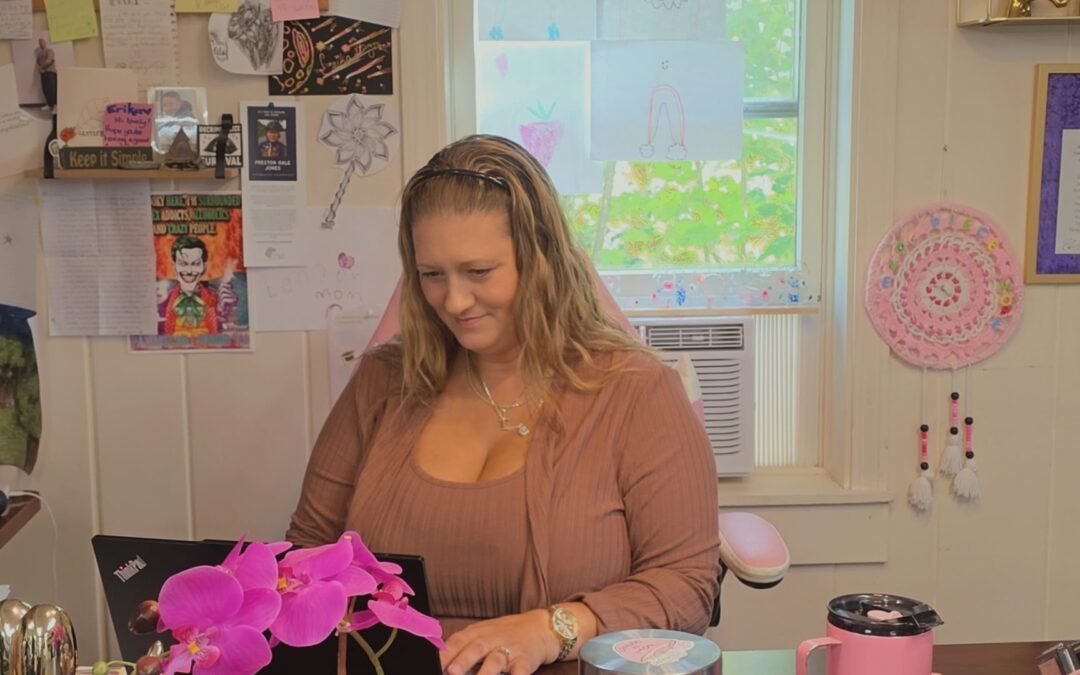
A Steady Hand Behind the Scenes: Marie Vadala’s Story

A Steady Hand Behind the Scenes: Marie Vadala’s Story

When Marie Vadala was five, her father made his last attempt at sobriety—and it stuck. What she remembers most from that time isn’t chaos, but community. “I don’t really remember the drinking,” she says. “I remember recovery. My dad was very active in AA and eventually became a counselor.”

Marie and her family lived across the street from the church that hosted AA meetings. People would often stop by if someone was having a hard time. “That was just our normal,” she recalls. “I think that’s where the wanting to help people came from—seeing the positive impact my dad and others in the community had on people.”

Those early memories shaped how she sees the world—and how she supports clients and staff at White Horse Recovery. “A person isn’t their worst day,” she says. “People act the way they act because of what they’ve experienced. We should never be judged for our worst day—there’s more to you.”

Marie also carries a message for parents who worry what their children will remember.

“Kids are resilient,” she says. “I always try to share that with clients who have young kids. I remember the recovery, not the drinking.”

Marie joined White Horse on August 14, 2017, initially as an administrative hire after her role in customer service and technical training at a cable company was dissolved. She needed to be closer to home and wanted work that mattered.

“I didn’t want to take a job just to take a job,” she says. “I wanted something impactful.” She applied to both Cornerstone Christian Academy and White Horse, drawn to missions that served people. At White Horse, she found a team with varied perspectives—those in recovery, those with family experience, and those without lived experience—united by a common purpose.

What began as a role with modest responsibility evolved into leadership as Operations & Finance Director. “Fortunately or unfortunately,” she says with a smile, “I ended up with a lot of responsibility.” The responsibilities suit her, though, because they let her protect what matters most: a welcoming, judgment-free experience for anyone who walks through the door.

Marie has witnessed countless transformations.

“You see people come in feeling broken,” she says. “Then they start our program, make connections—with other clients and with staff—and their lives completely change.”

Not every story ends the way anyone hopes, she acknowledges, but many do. Some graduates even become employees, paying forward what they received.

Small moments matter, too. When Marie conducted phone screenings, she made sure people felt seen from the start. “I always said, ‘I’m so glad you called. You called the right place,’” she says. “That phone call is hard to make. Reinforcing that decision is important. We need to do what we can to eliminate the stigma surrounding addiction and reassure the client or potential client that they’re coming to a safe space without judgment.”

Creating a space that feels like home—especially at the Ossipee location—has been intentional. “People tell us it’s welcoming and not sterile,” she says. “You feel comfortable.”

That warmth shows up in the community response, too. Clients refer friends. Alumni stop by to say hello and share updates. “One of our clinicians just had someone pop in to let us know he’s doing well,” she says. “We see that a lot.”

Eight years after joining White Horse, Marie’s perspective remains steady and compassionate—grounded in what she learned as a child and confirmed through years of service.

“You see people come in feeling broken,” she says. “Someone isn’t their addiction or their anger,” she says. “There’s always more to the story.”

If you or someone you know is struggling, you are not alone. White Horse Recovery offers services for those ready to start their journey to recovery. For more information, call 603-651-1441, Ext. 1.

A Voice for the Voiceless: Eric Ballard’s Story

A Voice for the Voiceless: Eric Ballard’s Story

Eric in active addiction

Two years ago, Eric Ballard faced a choice that would define the rest of his life: get clean and continue cancer treatment or die.

Eric’s struggle with addiction began at age 15, after he was overprescribed pain medication for his first ACL surgery. Within two years, he was addicted.

“The night I graduated high school was the night I started Oxy,” he recalls.

By the time he was 20, Eric had dropped out of college, was abusing drugs, and became homeless—a cycle that lasted nearly a decade. He spent years bouncing between couches and homeless shelters, unable to maintain trust or stability.

“I went to rehab twelve times, but only finished five programs,” he says. “Most of the time, I wasn’t trying to be there—I was mandated to be there. Only when I actually wanted it, did it work.”

In 2021, Eric was assaulted and developed a severe abdominal infection. Soon after, he learned he had cancer. Over the next four months, he endured fifteen surgeries and eleven hospital admissions. By 2023, his medical team told him he needed to get clean or he couldn’t continue his cancer treatments.

“I really prayed long and hard on it, because I didn’t want to be alive, but I didn’t want to die either. I didn’t know how to stop.”

That was when Eric entered Valley Vista for treatment—this time, by choice and already in withdrawal. “The first night out of recovery, I heard my sponsor speak at White Horse, and it gave me hope,” he says. “I promised myself I would never detox again.”

Eric relocated from Burlington, Vermont, to Littleton, New Hampshire, determined to build a new life. He credits the move—and the support he found in Littleton’s recovery community—for his success.

“If I had never taken a chance on myself and moved to Littleton, none of this would be possible.”

He found himself in a healthy relationship, with a sponsor who held him accountable and a network that supported his recovery. White Horse Recovery and the Littleton community became central to Eric’s journey. “This community is a blessing. It’s a key part of my success,” he says.

Eric Ballard now

Eric in recovery

On July 7 of this year, Eric began working as a Recovery Coach at White Horse. Drawing on his lived experience, he has found fulfillment in helping others navigate their own recovery journeys.

“It’s such a blessed feeling to know that I have the lived experience that allows me to thrive in this job,” he says. “It allows me to connect with clients on another level. I have sponsees and clients who depended on me. If I can help just one person, all my struggles will be worth it.”

Eric is passionate about meeting people where they are and giving back to the community that helped him heal. “We all do it at our own pace,” he says. “I love what I do and I’m grateful for who I work with and work for.”

Eric is now working toward becoming a Certified Recovery Support Worker and Licensed Alcohol and Drug Counselor. He is also committed to giving hope to others.

“I like to say I give a voice to the voiceless and hope to the hopeless.”

If you or someone you know is struggling, you are not alone. White Horse Recovery offers services for those ready to start their journey to recovery. For more information, call 603-651-1441, Ext. 1.